The Scenic Route Through the Produce Aisle: 8 Farm Stands Worth Planning a Trip Around
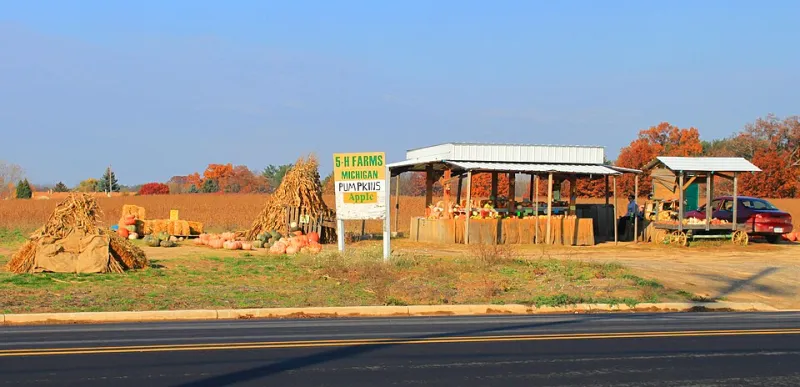
Photo: Dwight Burdette, CC BY 3.0, via Wikimedia Commons
Some road trips are about the destination. This one is about the cooler in the trunk.
There's a particular kind of American afternoon that involves a gravel lot, a hand-lettered price board, a folding table of squash, and a farmer who wants to tell you exactly how long the sweet corn has been off the stalk. It's not a souvenir stop. It's the whole point.
What follows are eight produce destinations that reward a detour — a mix of working farm stands, producer-run markets, and sheds where the vegetables are the main event. Hours shift with the season and the weather, so check before you drive. Half the pleasure is the phone call anyway.
1. Fishkill Farms — Hudson Valley, New York
A third-generation fruit and vegetable farm in Hopewell Junction that's become a fall institution for New Yorkers willing to trade the city for orchard rows. Apples get the crowds, but the real haul in late September and October is winter squash, pumpkins, and fresh-pressed cider. Buy: delicata and acorn squash, cider by the gallon. Go: weekday mornings in October, before the pick-your-own rush.
2. Pete's Greens — Craftsbury, Vermont
Up in the Northeast Kingdom, this operation has spent years proving that a northern farm can grow serious quantities of greens well into the cold months. The farm stand is modest and the produce is not — expect kale, chard, storage carrots, and the kind of root cellars-worth of beets that make a cooler worthwhile. Buy: anything leafy, plus bulk carrots for the winter. Go: late summer through fall.
3. Lancaster Central Market — Lancaster, Pennsylvania
Standing since the 1880s, this is one of the oldest continuously operating public markets in the country, and it's surrounded by some of the most productive farmland in the East. The Pennsylvania Dutch farm stands here run on a different calendar than the supermarket: whatever the surrounding county is pulling that week, in quantity. Buy: sweet corn in season, fall cabbage, and whatever the Amish stands are pushing that morning. Go: Saturday at opening, then eat breakfast there.
4. White Oak Pastures — Bluffton, Georgia
A Serious operation in the regenerative space for years, running cattle, poultry, and hogs across Georgia pastureland, with a farm store that carries produce alongside the meat. It's a good stop for anyone who wants to see what a vertically integrated farm looks like in practice — and for a conversation with people who have strong opinions about soil. Buy: whatever's in season from the market garden, plus stock for the road. Go: cool-weather months; Georgia summers are not messing around.
5. Boggy Creek Farm — Austin, Texas
The rare urban farm stand that functions like a real working farm — because it is one, tucked into East Austin and selling what it grows a few yards away. Winter is the secret season here: kale, spinach, carrots, and lettuces that thrive in Central Texas when everyone else has given up. Buy: winter greens and whatever's fresh-cut that morning. Go: Wednesday or Saturday market hours, early.
6. Nichols Farm & Orchard — Marengo, Illinois
A Midwest grower known for an almost absurd range of varieties — dozens of tomato types in August, plus garlic, peppers, and root crops through fall. The farm is a regular at Chicago-area markets, but driving out to Marengo gets you first pick and a lot more quiet. Buy: heirloom tomatoes in late summer, storage onions and garlic in fall. Go: August for tomatoes, October for squash.
7. Chino Farms — Rancho Santa Fe, California
The vegetable shed that has supplied some of Southern California's most celebrated restaurants for decades, and it still sells to whoever walks up. The setting — coastal hills just inland from Del Mar — is part of the appeal, but the produce is the reason chefs make the drive. Buy: whatever's being harvested that morning, especially beans, peas, and baby vegetables. Go: a weekday, and bring cash.
8. Sauvie Island Farms — Portland, Oregon
A short bridge-and-two-lanes hop from Portland puts you on an island of farmland in the Columbia River, where summer means u-pick berries and fall means pumpkins, corn, and squash. It's the kind of place where the cooler fills faster than you planned. Buy: berries in July, everything orange in October. Go: weekday afternoons to dodge the weekend crowds.
Detour Rules Worth Following
Bring a real cooler. A soft bag won't survive August. Ice packs, a hard-sided box, and a towel to keep things from sliding around.
Buy less than you think. Farm-stand vegetables are often sold in generous quantities. A half-bushel of tomatoes is a project, not a purchase.
Ask what's best today. Farmers will tell you. They'd rather you leave with the thing that's peaking than the thing that isn't.
Skip the toll road home. The whole idea is to take the long way and see what's growing.