Beauty Standards Are Starving the Farm: In Defense of the Imperfect Carrot
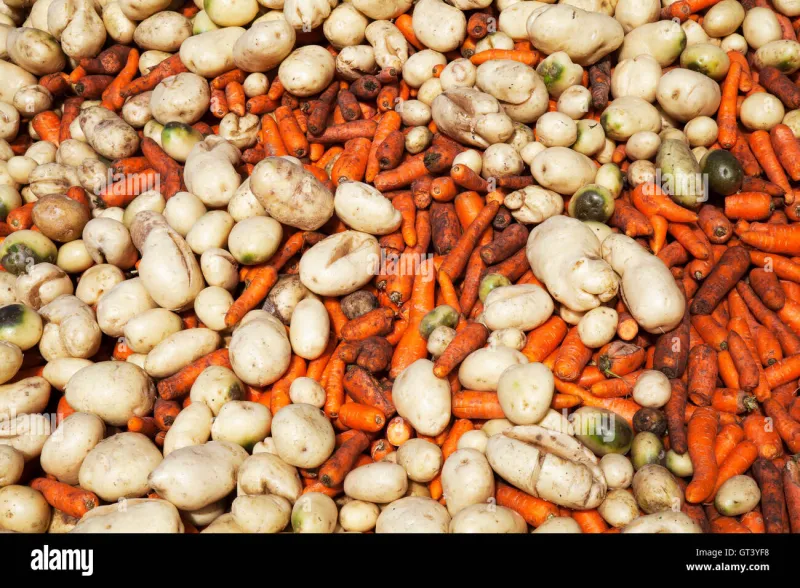
Photo: misshapen ugly carrots and vegetables at farmers market, via c8.alamy.com
Somewhere in a field in Idaho right now, a perfectly nutritious carrot is being rejected. Not because it's rotten. Not because it's unsafe. Because it forked into two legs, and two-legged carrots confuse shoppers.
We think that's absurd, and we'd like to formally nominate the misshapen carrot for a comeback.
The Cosmetic Filter Nobody Voted For
Here's how the system works today: growers contract with retailers who specify produce dimensions down to the inch. A cucumber that's too curved, an apple that's too small, a pepper with a cosmetic blemish — all of it can be culled before it ever reaches a distribution center. Some of it becomes juice or cattle feed. A lot of it gets tilled back into the dirt.
Estimates vary, but researchers generally agree that a meaningful share of American produce — plausibly a third or more — never reaches a human mouth. The overwhelming driver isn't spoilage in transit or a recall. It's appearance.
Let's be clear about what this means economically. A farm's revenue is capped by what a buyer accepts. When 20% of a crop fails the beauty test, that's 20% of the farmer's labor, water, seed, and diesel written off for a shape standard invented by a marketing department.
The Science Says the Carrot Is Fine
Here's the part that should end the debate: cosmetic irregularity has essentially nothing to do with nutrition or flavor. A forked carrot grew in rocky soil. A scarred heirloom tomato cracked during a rain event. A crooked cucumber leaned against a vine. In some cases, stressed or odd-looking produce actually concentrates sugars and flavor compounds — the ugly ones can be the tasty ones.
What blemishes can signal is a shorter cosmetic shelf life or, rarely, a pathogen. So yes, inspect your food. But a knobby potato isn't a warning label. It's a potato.
The Rebellion Is Already on the Shelf
The good news: a genuine ugly-produce economy has taken root in the last decade, and it's working.
- Discount delivery services like Imperfect Foods and Misfits Market built entire businesses on cosmetically rejected produce, often priced 20–40% below grocery store rates.
- Major retailers have run "ugly" branding programs, selling wonky apples and potatoes at a discount under names that lean into the joke.
- Farmers markets and CSA boxes have always been the original ugly-produce channel — small growers routinely pack whatever the field gave them, and subscribers eat it happily.
- Food banks increasingly partner with farms to route cosmetically culled produce to families who need it, sometimes at no cost to the grower.
Every one of these channels converts waste into revenue. Every one of them proves the demand exists once you take the beauty filter off.
The Case for Lowering Your Standards
We'd argue the shopper holds more power here than any retailer. When you buy the two-legged carrot, three things happen at once:
First, a farm captures revenue it would have lost. On thin-margin vegetable operations — and virtually all of them are thin-margin — that recovered revenue can be the difference between planting next season and not.
Second, you vote against a wasteful system with your wallet. Retailers track what moves. If ugly produce sells, buyers will order more of it, and specs will quietly loosen.
Third, you usually save money on food that is, nutritionally, identical. In this economy, that's not a small thing.
A Modest Proposal for Your Next Grocery Run
Start small. Next time you see a "reduced for quick sale" bag of blemished peppers, buy it. If a delivery service offering imperfect produce operates in your area, try one box. At the farmers market, ask a grower what didn't make it to the table — you'll often walk away with a deal and a story.
American agriculture doesn't have a supply problem. It has a standards problem. And unlike droughts or tariffs, this one can be fixed by something as simple and pleasant as eating a weird-looking carrot.
It might even taste better.