Cold, Fast, and Surprisingly Good: The Real Story Behind Today's Frozen Vegetables
Ask most people whether fresh or frozen vegetables are better for you, and they'll say fresh without hesitation. It just seems obvious, right? Fresh is natural. Frozen is processed. Fresh came from a farm. Frozen came from a factory.
Except that's not really how it works — and nutritionists have been trying to correct this misconception for years with limited success. The truth about frozen vegetables is genuinely surprising, and it has real implications for how you shop, cook, and eat.
The Journey Your "Fresh" Produce Actually Takes
Here's something worth sitting with. That bag of fresh spinach you picked up at the supermarket? It was likely harvested several days ago, packed onto a refrigerated truck, shipped across hundreds or even thousands of miles, offloaded at a distribution center, transported again to your store, and then sat in the produce section for another day or two before you put it in your cart.
Nutrient degradation starts the moment a vegetable is harvested. Vitamins — particularly water-soluble ones like vitamin C and folate — begin breaking down almost immediately after a plant is cut from its roots. By the time that "fresh" spinach reaches your refrigerator, it may have lost a meaningful portion of its nutritional value.
Frozen vegetables work on an entirely different timeline. Most commercial freezing operations are located close to growing regions, and produce is typically frozen within hours of harvest — sometimes within minutes. That speed is the whole point.
Flash Freezing: What It Actually Does
Modern industrial freezing doesn't just toss vegetables into a cold room. Flash freezing — technically called individual quick freezing, or IQF — blasts produce with extremely cold air at very high velocity, dropping the temperature of each piece rapidly and individually. The process locks in moisture, texture, color, and critically, nutritional content at peak ripeness.
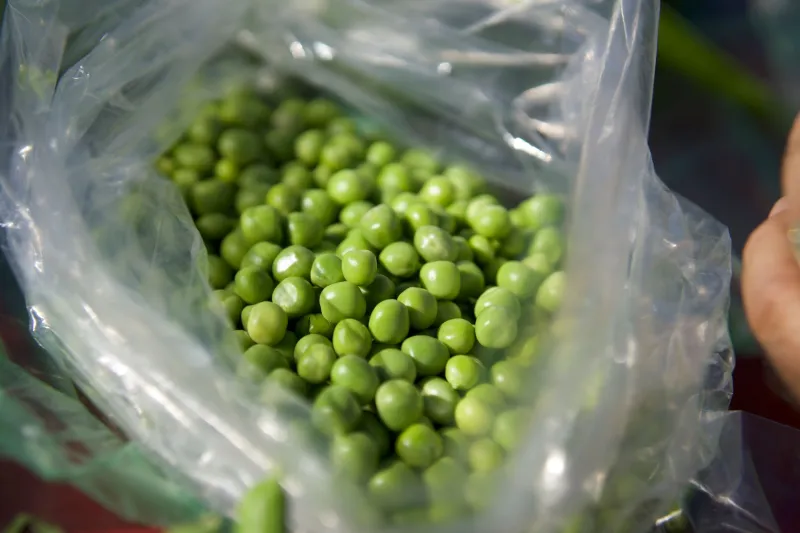
A 2017 study from the University of Georgia compared nutrient levels in fresh and frozen versions of several common vegetables and found that frozen versions were nutritionally comparable — and in some cases superior — to their fresh counterparts after the typical storage period. Broccoli, peas, and green beans all showed strong results in the frozen category.
"The harvest-to-freeze window is everything," says Dr. Rebecca Huang, a registered dietitian based in Portland, Oregon. "When that window is short and the freezing process is fast, you're essentially capturing the vegetable at its nutritional peak. That's genuinely hard to replicate with produce that's been traveling for a week."
Farmers Are Paying Attention
This isn't just a story about industrial food science. Small and mid-sized farms are increasingly incorporating freezing into their own operations — not as a compromise, but as a smart strategy.
Take overharvest situations. A farm growing sweet corn might hit a perfect harvest window where everything comes in at once. Selling all of it fresh before it loses quality is nearly impossible. Freezing the excess allows the farm to capture that peak quality and sell it outside the fresh season, extending revenue and reducing waste.
Callie Norris runs a 75-acre vegetable farm in the Willamette Valley in Oregon. She started freezing excess peas and edamame three seasons ago after losing too much product to timing mismatches. "We were throwing away good food," she says. "Now we freeze it and sell it through our farm store and online. People love knowing it came from our fields, even if it's in a bag."
That kind of transparency — frozen vegetables with a known farm origin — is something the broader frozen food industry simply can't offer. And it's becoming a genuine selling point.
When Frozen Actually Wins
There are specific situations where reaching for the freezer bag is just the smarter call, and it's worth knowing what they are.
Out-of-season produce. A fresh tomato in February in Minnesota is a pale, mealy disappointment. A frozen tomato that was processed at peak summer ripeness in California is going to beat that every single time in terms of both flavor and nutrition.
Nutrient-dense standbys. Frozen spinach, peas, edamame, and corn are workhorses. They're nutritionally solid, they last for months, and they cook quickly. For people who struggle to use fresh produce before it turns, frozen is genuinely the better practical choice.
Budget cooking. Frozen vegetables are almost always less expensive than their fresh equivalents, often dramatically so. For families trying to eat well on a tight budget, the freezer section can be an ally, not a compromise.
The Fresh-Is-Best Myth and Where It Came From
The cultural bias toward fresh produce isn't irrational — it has real roots. For most of human history, fresh really was better, because the alternative was poorly preserved or heavily processed food that had genuinely lost its quality. The association stuck even as the technology changed.
Marketing has also played a role. The language around fresh produce — farm-fresh, just-picked, locally grown — carries enormous positive connotations. Frozen packaging struggles to compete with that emotionally, even when the product inside is nutritionally excellent.
At TSL Vegetables, we're all about connecting people with quality produce and the farmers who grow it. That mission doesn't change based on whether something is fresh or frozen. What matters is the quality of the growing, the care in the harvesting, and the transparency about where your food comes from.
A Smarter Way to Think About Your Produce
The honest answer is that fresh and frozen aren't enemies. They're tools, and the smart move is knowing when to use each one.
Buy fresh and local when produce is in season and you're going to use it quickly. That's when fresh really does win — flavor, texture, and the satisfaction of eating something grown nearby are all at their peak. But don't treat frozen as a fallback for weak moments. It's a legitimate, nutritionally sound option that deserves a real place in your kitchen strategy.
The vegetable that matters most is the one you actually eat. If frozen peas mean you're getting greens into your diet on a Tuesday night when you're tired and the fridge is empty, that's a win — full stop.