Reading 'Regenerative': A Shopper's Field Guide to the Produce Aisle's Newest Buzzword
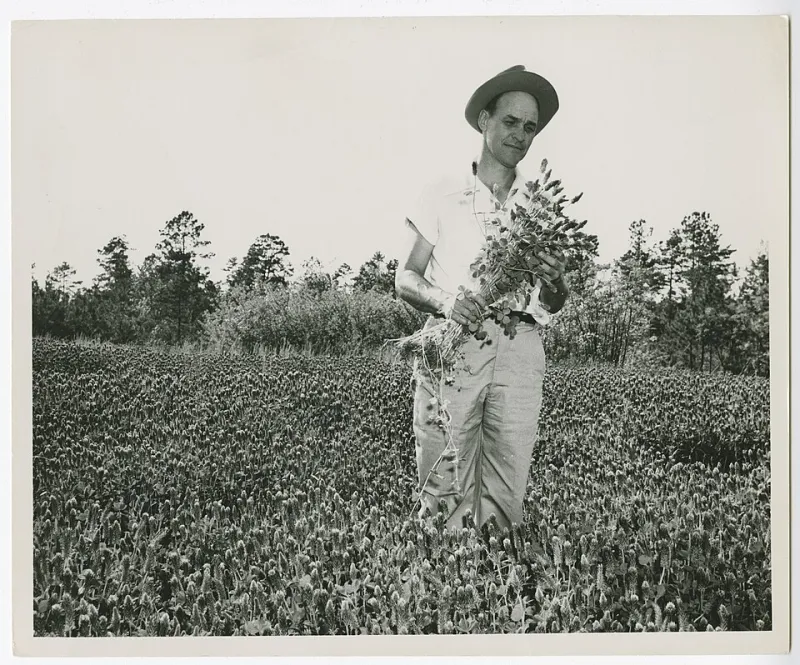
Photo: United States. Soil Conservation Service; United States. Department of Agriculture, Public domain, via Wikimedia Commons
There's a decent chance you've spotted it already: a small seal on a bag of carrots, a chalkboard line at the farm stand, a paragraph on the back of a salad kit. Regenerative. The word has been migrating out of soil-science conferences and grant applications and into the produce aisle, and in 2026 it's turning up in more places every month.
Here's the catch. "Regenerative" isn't a regulated term in the United States. "Organic" lives under the USDA's National Organic Program, gets verified by accredited certifiers, and comes with a rulebook thick enough to prop open a barn door. "Regenerative" has no federal definition, no minimum standard, and no one inspecting the fine print. Anyone with a printer can put it on a label.
That doesn't make it meaningless. It makes it something you have to read carefully.
What the Word Is Supposed to Mean
In farming circles, regenerative describes practices that build soil instead of wearing it out: cover crops that keep living roots in the ground through winter, less tillage, longer and more varied crop rotations, compost and manure applications, and — on operations with animals — grazing that moves livestock across pasture the way herds once moved on their own.
The pitch is that these practices hold carbon and water in the ground, cut erosion, and leave the land in better shape than the farmer found it. Enthusiasts and skeptics argue about how large those benefits really are and how quickly they show up, but the underlying practices are real, measurable, and on many farms older than the term itself.
Why the Terminology Stays Loose
Without a legal definition, the word works more like "natural" or "artisan" than like "organic." The Federal Trade Commission's Green Guides govern environmental marketing claims in general and frown on vague, unqualified assertions, but a single word on a produce sticker rarely draws a challenge.
Which means the useful question isn't "does this package say regenerative?" It's "does anything stand behind that word?"
The Seals You'll Actually Encounter
Regenerative Organic Certified (ROC). The most demanding of the group, largely because it stacks on top of USDA Organic. Farms must be certified organic first, then meet additional standards across three pillars: soil health, animal welfare, and social fairness. It's tiered — Bronze, Silver, Gold — so a label may tell you which level was reached.
Regenified. An outcome-based program with five tiers that verifies land management through soil testing rather than a practice checklist alone. It isn't tied to organic certification, so you'll see it on conventional operations that are mid-transition.
Certified Regenerative by A Greener World. A whole-farm plan plus third-party auditing, and it folds in animal welfare standards for operations that raise livestock alongside crops.
Land to Market / Ecological Outcome Verification. Built by the Savory Institute around measuring whether land health is trending up or down over time. You'll see it far more often on meat and fiber than on vegetables, but it's beginning to appear on produce packaging too.
Retailer and brand programs. Several grocery chains and food companies now run their own "regenerative" sourcing programs. Quality varies enormously. Some require independent verification; others amount to a supplier questionnaire. Ask what standard sits behind the logo.
What a Seal Can't Promise
A certification verifies that a farm met a written standard at a point in time. It does not promise that your tomato tastes better, that the soil is fixed, or that the carbon math works out. Soil improvements are measured in seasons and years, not shipments.
And a farm can be doing genuinely excellent soil work with no seal at all. Audits cost money and time, and small operations often can't spare either. So treat the absence of a logo as neutral rather than as a red flag. Treat the presence of one as a starting point, not a finish line.
A Five-Question Checklist
The next time a label makes a claim, run it through this:
- Is there a third-party seal? If yes, which program, and at what tier?
- Does the claim describe practices or just a vibe? "Cover cropped since 2019, no-till, compost applied each spring" is something you can evaluate. "Regeneratively grown" by itself is not.
- Who is making the claim? The farm, the processor, or the retailer? Each sits at a different distance from the soil.
- How much of the operation does it cover? One product line, one field, or the whole farm?
- Can you ask a human? At a farm stand or market this is the easiest question in the world: "What are you doing for your soil?" The answer tells you more than any sticker.
What to Do With All This
The regenerative label is arriving in your produce aisle whether or not the rules catch up — and there's a real upside to that, since shopper attention is pushing money and technical help toward soil-building practices that were ignored for decades.
Just don't outsource your judgment to a single word. Use the seals as shortcuts, read the claims skeptically, and remember that the most reliable verification is still a two-minute conversation with the person who grew your food.