The Price Tag You Don't See: What Big Box Produce Actually Costs You (And the Planet)
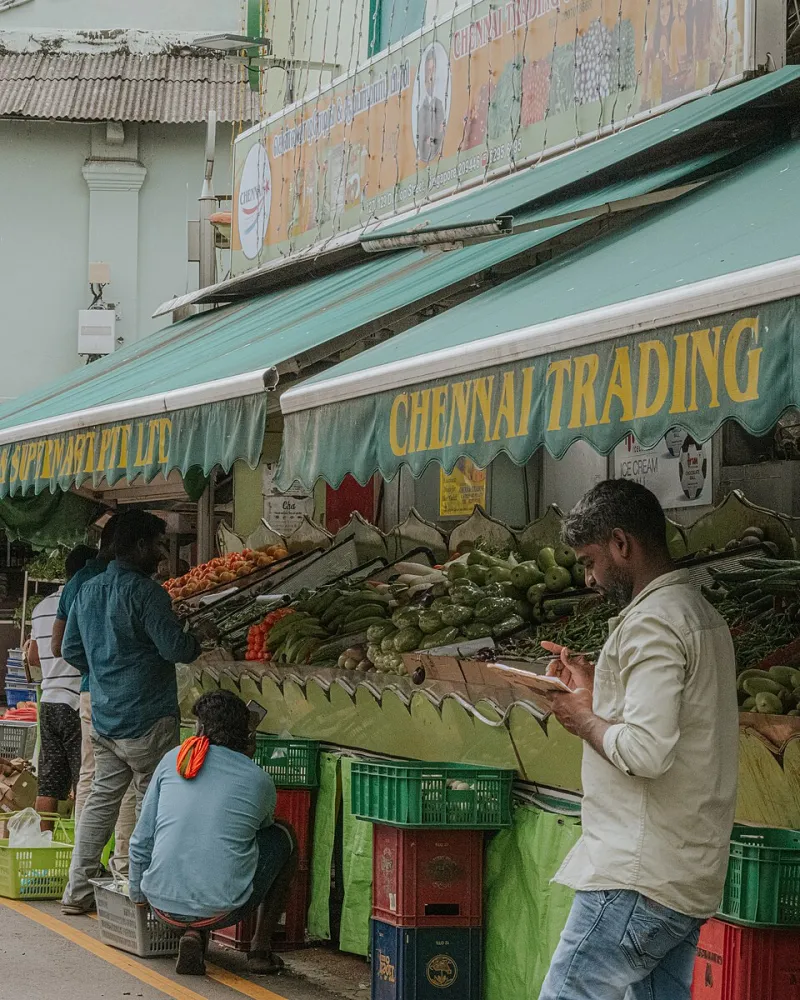
Photo: Pockethealer, CC BY-SA 4.0, via Wikimedia Commons
Let's be honest: most of us buy vegetables based on price and convenience. You're standing in the produce aisle, you've got 20 minutes before you need to get home and start dinner, and you grab whatever looks decent and fits the budget. That's not a character flaw — that's just modern life.
But here's the thing: the number on the sticker is only part of the story. The real cost of that conventionally sourced produce from a big box retailer is spread across your trash can, your long-term health, and a supply chain with a carbon footprint the size of a small country. And once you start doing the math, direct-from-farm purchasing starts looking a lot more competitive than you might expect.
This isn't an anti-grocery-store manifesto. It's an honest look at the economics that most produce marketing conveniently leaves out.
The Waste Factor Nobody Talks About
The USDA estimates that American households throw away between 30 and 40 percent of their food — and fresh produce is one of the biggest offenders. Think about the last time you found a bag of salad greens turning to slime in the back of your fridge, or a bell pepper that went soft before you got around to using it.
That waste has a dollar value. If your household spends $60 a month on fresh vegetables and throws away roughly a third of it, you're effectively spending $20 a month on produce that goes straight to the trash.
Why does conventionally sourced produce go bad so fast? A lot of it comes down to the supply chain timeline. Vegetables that travel 1,500 miles from a California or Florida farm to a Midwestern distribution center to your local store have already burned through a significant portion of their shelf life before they even hit the display case. By the time you get them home, you're working with a much smaller window.
Farm-direct produce — harvested closer to delivery and shipped in shorter timeframes — typically arrives with more of its usable life intact. That means less waste, which means more of your grocery dollar actually ends up in your body instead of your compost bin.
The Nutrition Drain
Here's one that doesn't show up on any receipt: the nutritional value of your vegetables is not fixed. It degrades over time, and it degrades faster at certain temperatures and under certain handling conditions.
Vitamin C is particularly vulnerable. Studies have shown that spinach can lose up to 90% of its vitamin C content within 24 hours at room temperature, and meaningful losses occur even under refrigeration over several days. Folate, potassium, and various antioxidants follow similar patterns.
This creates a situation where you're buying vegetables partly for their health benefits, but receiving a fraction of those benefits because of how long the produce has been in transit and storage. You're paying for the nutrition label on the bag, but eating something that only partially delivers on it.
When you buy vegetables that were harvested within 24 to 48 hours of delivery, you're getting a meaningfully more nutrient-dense product. Over time, that difference could translate to real health outcomes — fewer supplements needed, better energy levels, and a diet that actually delivers what it promises.
What "Cheap" Vegetables Actually Cost the Environment
The environmental accounting here is worth pausing on, even if it doesn't come out of your wallet directly.
The average piece of produce in the US travels approximately 1,500 miles to reach consumers, according to research from the Leopold Center for Sustainable Agriculture. That transportation — primarily via refrigerated diesel trucks — generates substantial greenhouse gas emissions. Cold storage facilities along the way add to that energy footprint.
Large-scale conventional farming also tends to be more reliant on synthetic fertilizers and pesticides, both of which carry their own environmental costs: runoff that affects waterways, soil degradation over time, and energy-intensive manufacturing processes.
Small and mid-scale farms selling directly to consumers typically operate with shorter distribution chains and, in many cases, more sustainable growing practices. The environmental delta between a head of lettuce grown 30 miles away and one grown 1,500 miles away is significant — even if it doesn't appear anywhere on the price tag.
Running the Real Numbers
Let's do a rough comparison. Suppose you spend $80 a month on fresh vegetables at a big box retailer. Factoring in a 30% waste rate, your effective cost for vegetables you actually eat is closer to $115 a month (because you need to replace what you toss). Add in the cost of supplements you might take to compensate for nutritional gaps, and the picture shifts further.
Now consider a farm-direct subscription or marketplace purchase at $95 a month. The waste rate on fresher produce tends to be lower — let's say 15%. Your effective cost for vegetables you actually consume drops to around $112. And the nutritional density is higher, meaning you're getting more value per dollar on the health side of the ledger.
These numbers are illustrative, not universal — your mileage will vary based on what you buy and how you store it. But the point stands: the sticker price comparison between conventional and farm-direct produce often favors the conventional option in a way that evaporates when you account for waste and quality.
The Convenience Trap
Convenience is real and it matters. Not everyone has the time or access to shop farmers markets every weekend or manage a CSA subscription. Big box stores exist because they solve a genuine problem.
But it's worth questioning whether the convenience of one-stop shopping is actually as seamless as it feels. Ordering directly from farms through platforms like TSL Vegetables, for instance, can be done in minutes from your phone and delivered to your door — arguably more convenient than driving to a store, navigating a parking lot, and standing in a checkout line.
The friction of direct purchasing has dropped considerably in recent years. And as it does, the value equation tilts further toward fresher, more transparent sourcing.
A Smarter Way to Think About Produce Spending
None of this means you need to overhaul your entire grocery routine overnight. But a few shifts in how you think about produce spending can make a real difference:
- Calculate your waste rate. Keep track for two weeks of how much produce you throw away. The number might surprise you.
- Compare delivered cost, not sticker cost. What are you actually consuming vs. discarding?
- Think about nutrition as part of the value equation. Fresher vegetables deliver more of what you're buying them for.
- Look for hybrid approaches. Buy staples at the grocery store, but source your most nutrient-sensitive items — leafy greens, tomatoes, fresh herbs — directly from farms when you can.
The cheapest vegetable isn't always the one with the lowest price tag. Sometimes it's the one that actually gets eaten.