Five Farms, Five Visions: The American Growers Quietly Changing How We Eat
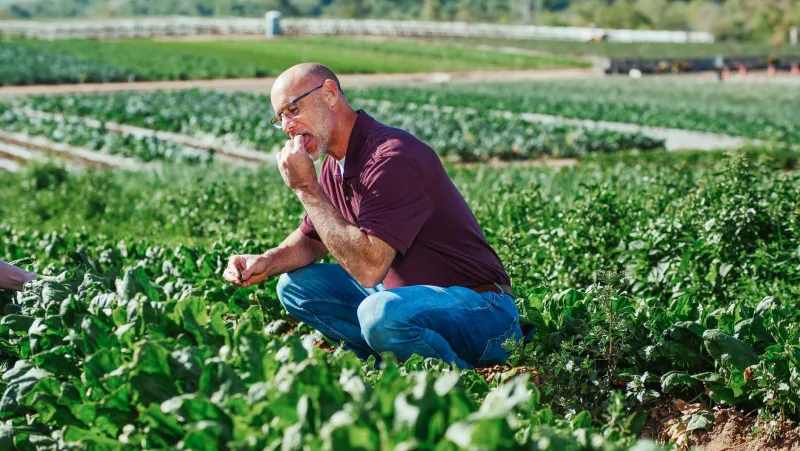
American agriculture is at a crossroads. On one side, you've got the massive industrial system that feeds most of the country — efficient, high-volume, and optimized for shelf life over flavor. On the other, a growing movement of farmers who are doing things differently: rebuilding soil health, ditching synthetic inputs, embracing biodiversity, and selling directly to the communities around them.
These aren't utopian dreamers. They're working farmers dealing with weather, debt, labor shortages, and market pressures like everyone else. But they've made a deliberate choice to farm in a way that prioritizes the long game — for their land, their customers, and their kids who might someday take over the operation.
We spent time talking with five of them. Here's what they're building.
1. Riverbend Roots Farm — Willamette Valley, Oregon
When Dani and Theo Kessler took over Dani's family farm eight years ago, the soil was exhausted. Decades of conventional row cropping had left the ground compacted and dependent on synthetic fertilizers just to produce a mediocre yield. "We basically inherited a beautiful piece of land that had forgotten how to feed itself," Dani says.
Their turnaround began with cover cropping and composting — building organic matter back into the soil one season at a time. Today, Riverbend Roots grows over 40 varieties of vegetables on 22 acres, all certified organic, and sells through a weekly CSA (community-supported agriculture) subscription that has a waitlist.
What makes their approach distinctive is a practice called "polyculture planting" — growing multiple crops in the same bed rather than monoculture rows. It looks a little chaotic, but the results speak for themselves: fewer pest problems, better water retention, and a natural resilience that got them through a brutal drought two summers ago while neighboring farms struggled.
How to support them: Riverbend Roots ships seasonal CSA boxes to addresses throughout Oregon and southern Washington from May through November.
2. Piedmont Greens Collective — Chatham County, North Carolina
This one's a little different. Piedmont Greens isn't a single family farm — it's a cooperative of seven small-scale Black farmers who pooled their land, equipment, and labor to create something none of them could have built alone. Founded in 2019 by longtime grower Marcus Webb, the collective now farms about 60 acres across four adjacent properties.
"There's power in numbers," Marcus explains. "One of us couldn't afford a walk-in cooler. Seven of us can. One of us couldn't get into the regional wholesale market. Seven of us have a seat at the table."
The collective focuses on Southern heirloom vegetables — varieties like Sea Island red peas, Mortgage Lifter tomatoes, and Jimmy Nardello peppers that have deep roots in the region's agricultural history. They sell at three local farmers markets, supply several Raleigh-Durham restaurants, and run a sliding-scale farm stand on Saturdays that ensures their produce is accessible to lower-income community members.
How to support them: Follow Piedmont Greens on social media for market schedules and seasonal availability. Restaurants in the Triangle area interested in sourcing can reach out directly through their website.
3. High Desert Harvest — Taos County, New Mexico
Farming in the high desert is not for the faint of heart. Water is scarce, the growing season is short, and the altitude throws curveballs that flat-land farmers never have to think about. But Elena Vasquez has been doing it for 22 years, and she wouldn't trade it.
Elena grows specialty chiles, heirloom corn, and drought-tolerant greens using acequia irrigation — a centuries-old communal water-sharing system brought to the region by Spanish settlers and practiced by Indigenous communities long before that. It's one of the oldest sustainable irrigation practices in North America, and Elena is one of its most passionate advocates.
"This land taught me how to farm," she says. "I didn't come in with a plan. I came in with seeds and questions, and the land answered."
High Desert Harvest sells at the Taos Farmers Market and ships dried chiles and corn products nationally through her online store. Her Hatch-style green chile — roasted and frozen at peak season — has developed a devoted following among transplants who miss the flavors of the Southwest.
How to support them: Order directly through her website for shipped dried goods, or visit the Taos market on Saturday mornings from late June through October.
4. Lakewood Family Farm — Leelanau Peninsula, Michigan
The Leelanau Peninsula is best known for cherries and wine grapes, but the Nakamura family has spent the past 15 years proving it's also exceptional vegetable-growing country. Third-generation farmer Kenji Nakamura transitioned the family's 45-acre operation to regenerative practices after returning from agricultural training in Japan, where he was struck by the precision and intentionality of small-scale farming.
Lakewood's signature practice is what Kenji calls "observation farming" — spending significant time just watching: how water moves across the land, where pests congregate, which areas dry out fastest. "Most farmers are reactive," he explains. "We try to be anticipatory. If you understand your land deeply enough, you can see problems coming before they arrive."
The farm grows an impressive variety of Asian vegetables — shishito peppers, Japanese eggplant, mizuna, shiso — alongside Midwestern staples, creating a unique market presence in a region not typically associated with that produce. Their annual garlic harvest, featuring eight heirloom varieties, sells out online within hours.
How to support them: Join their email list for harvest notifications and early access to limited items. They sell at the Traverse City farmers market and ship garlic nationwide every September.
5. Gulf Coast Growers — St. Tammany Parish, Louisiana
After Hurricane Katrina devastated the region in 2005, brothers Andre and Clifton Broussard made a decision: they would rebuild their family's small vegetable farm, and they would do it in a way that could survive the next storm. Nearly two decades later, Gulf Coast Growers has become a model for climate-adaptive farming in the South.
Their approach involves raised bed systems designed to drain quickly after flooding, heat-tolerant crop varieties developed specifically for the Gulf Coast climate, and a diversified income model that includes a farm stand, restaurant partnerships, and a growing wholesale operation. "We don't fight the weather anymore," Andre says. "We design around it."
The farm grows year-round thanks to Louisiana's mild winters, specializing in sweet potatoes, okra, Creole tomatoes, and an impressive range of hot peppers. They've also partnered with a local culinary school to offer farm-to-kitchen education programs for aspiring chefs.
How to support them: Gulf Coast Growers supplies several New Orleans-area restaurants and sells at the Covington Farmers Market on Saturdays. Follow them online for seasonal updates.
What These Farms Have in Common
Five different states, five different crops, five different methods — but the same underlying belief: that farming done right is good for the land, good for the community, and good for the people eating the food.
At TSL Vegetables, we think these stories deserve to be told. Not because sustainable farming is perfect or easy, but because it's possible — and because the more people who choose to support it, the more possible it becomes. Next time you're at your local market or browsing for produce online, ask where it came from. The answer might surprise you.